
Visit Mahane Yehuda Market before lunch and you will find one of Jerusalem’s most vivid daytime food scenes: stacked olives, warm bread, fragrant spices, fresh juice and small counters serving dishes that reflect the city’s many food traditions. Known locally as the shuk, the market is better explored by appetite than by a rigid restaurant ranking.
What should you eat at Mahane Yehuda Market? Look for a warm khachapuri or another savory pastry, Jerusalem-style bread, something from a salad or pickle counter, a glass of fresh juice, a taste of halva and spices to take home. For a larger lunch, check a working market kitchen or casual prepared-food stall. Exact menus, vendor locations and opening hours can change; the business listings below are starting points, not confirmed same-day availability.
Best foods to try at Mahane Yehuda Market
| Food | What to expect | Useful buying tip | Typical dietary consideration |
|---|---|---|---|
| Georgian khachapuri | Bread filled with cheese; some versions include egg | Order hot and expect preparation time | Dairy, wheat; sometimes egg |
| Burekas and savory pastries | Flaky or doughy baked snacks with different fillings | Ask what is inside before choosing | Wheat, sometimes dairy or egg |
| Jerusalem pretzel and laffa | Fresh bread for eating now or later | Buy near the time you intend to eat | Wheat; possible sesame |
| Hummus, salads and pickles | Small dishes and preserved vegetables | Choose a portion size before adding extras | Sesame in tahini; possible allergens |
| Spice blends | Za’atar and other local or regional seasonings | Ask for a small quantity and ingredients | Nuts, sesame or cross-contact possible |
| Halva | Dense, sweet sesame confection | Sample a flavor before buying a box | Sesame; nuts in some varieties |
| Fresh juice | Seasonal fruit and herb combinations | Ask about added sugar and ingredients | Allergens and shared equipment vary |
| Cooked market lunch | Soups, stews or seasonal prepared dishes | Check the day’s menu and serving hours | Meat/dairy, gluten and other ingredients vary |
This is a daytime food guide, not a guide to the market’s bars after dark. For that separate scene, see Mahane Yehuda at Night when published.


1. Start with fresh bread or a savory pastry
Bakeries are a sensible first stop. A warm pastry is easy to share, and a small purchase gives you time to orient yourself before a heavier lunch. Look for burekas with cheese, potato or other fillings, and ask whether the pastry is served with condiments or a boiled egg. The answer depends on the bakery; there is no single market-wide recipe.
For something distinctly Georgian, khachapuri has a cheese-rich filling and several regional forms. The Mahane Yehuda market’s Hachapuria listing describes a shop at 5 HaShikma Street, near HaEshkol, serving pastries baked to order. Its description warns that preparation may take a few minutes and recommends ordering in advance. Treat the address and menu as a lead to verify with the business—not a promise that it will be open when you arrive.
Prefer plain bread? The market’s Hava Brothers Bakery profile names 6 Machane Yehuda Street and describes laffa, pitas, Jerusalem pretzels and other baked goods. Bread is easy to carry, but ask about sesame if someone in your group has an allergy.
2. Try halva rather than buying a random sweet box
Halva is a compact confection based on sesame and sugar. Its texture can be crumbly or smooth depending on preparation, and shops may sell versions with nuts, chocolate or flavorings. Because it is rich, a small portion can be enough for two people.
The market’s Halva Kingdom profile lists 12 Etz HaChaim Street and describes a wide range of flavors. Begin with a basic sesame version so you know what you are comparing. If a vendor offers a taste, ask what ingredients are present rather than assuming every flavored version is suitable for a sesame- or nut-sensitive traveler.
Halva is also a practical edible gift, but it can soften in heat. Choose packaging appropriate for the rest of your journey, and check the labeled ingredients and expiration date before putting it in your luggage.
3. Explore cheeses, olives and prepared salads
The market is not only street food. Its grocery traditions are visible in cheese counters, olives, pickles, salads and pantry products that locals take home. You can build a small picnic from those ingredients, provided you have somewhere suitable to eat and can keep perishables at safe temperatures.
Basher Fromagerie is listed at 53 Etz HaChaim Street and is known in the market directory for its large cheese selection. If you are choosing cheese for immediate consumption, ask for a small amount and whether it needs refrigeration. The market’s Uri and Sons Delicacies listing at 18 Machane Yehuda Street describes prepared salads, pickles and olives as part of its range.
A deli-style stop is especially useful when your group includes people who do not want a full cooked meal. Buy only what you can carry safely. A hot day and a long sightseeing walk are not ideal conditions for keeping soft cheese unrefrigerated.
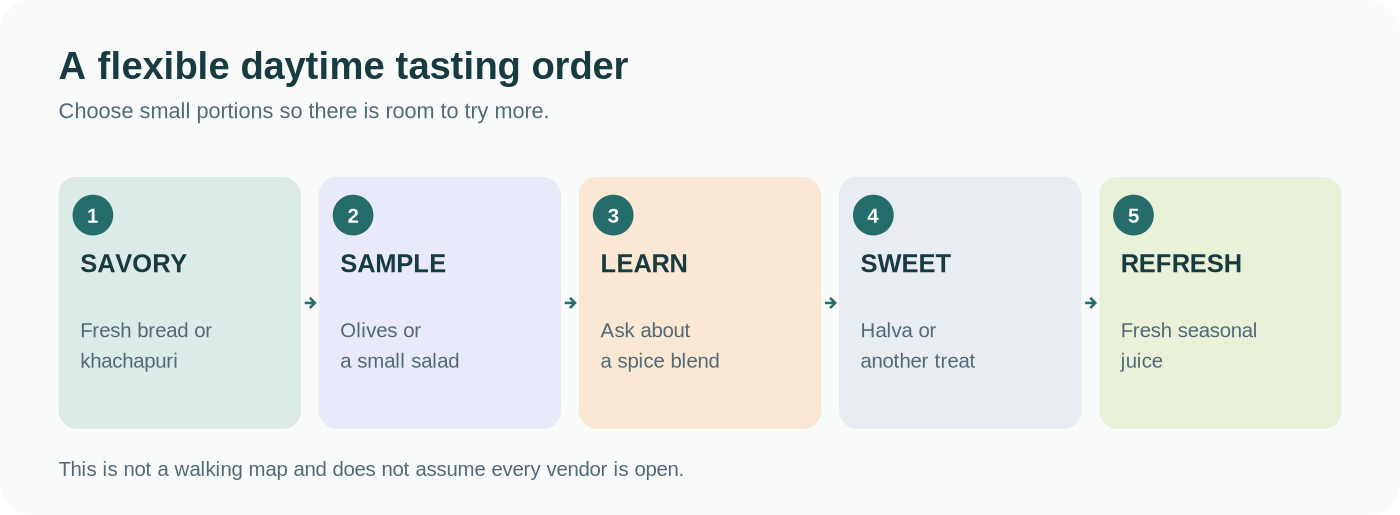
4. Smell the spices, then ask how to use them
Spice stalls can be the market’s most educational stop. The appeal is not only the color of the displays; a useful seller can explain how to use a blend in roasted vegetables, bread, rice or a stew. Za’atar is one familiar example, but mixes differ by recipe. Never assume it contains the same ingredients everywhere.
The Etz HaChaim Street market directory lists sellers such as Pereg Spices. The HaEgoz Street directory includes Ben David Spices. These directory entries are helpful for identifying the type of shop to look for, not proof of current stock or individual prices.
Buy a modest quantity and keep it labeled. If you want a spice for a specific dish, tell the shopkeeper what you intend to cook; if you have dietary restrictions, ask whether the mixture contains sesame, nuts, salt or other additions. Spices are lightweight souvenirs, but some destinations restrict the import of plant products, so check your home country’s rules before flying with them.


5. Drink something fresh and seasonal
A fresh juice stand is a welcome pause between savory and sweet stops. Pomegranate, citrus, carrot and herb-based juices are common styles to look for, though specific fruit availability changes during the year. A juice is not a medical treatment, regardless of any sales pitch about health benefits.
The market’s Uzi Eli listing gives 10 HaEgoz Street and describes unusual juice combinations. A second entry, HaTapuach 1 Juice Bar, lists 1 HaTapuach Street and seasonal juices and shakes. Both are directory references; confirm current location and trading hours directly.
If you prefer less sugar, ask what is in the drink and whether it is prepared with syrup, added sweeteners or just fruit. Travelers with allergies should ask about shared blenders and add-ins. Bottled water is useful when tasting strongly flavored snacks or during hot weather.
6. Sit down for a proper market lunch
If your goal is lunch rather than a series of snacks, choose one restaurant or prepared-food counter, then treat the rest of the market as browsing. A cooked dish also makes sense when you have a long afternoon ahead and do not want to rely entirely on sweets or pastries.
The official market restaurants directory includes establishments serving pasta, vegetarian food and market-inspired dishes. The Ochlim B’Shuk directory entry describes home-style meals such as couscous, kibbeh, soups and salads. Because individual menus and operators can change, ask what is actually being served today rather than planning around an old menu photographed online.
For visitors eating kosher, vegetarian, vegan or gluten-free, a cuisine label is only a starting point. Ask the kitchen what is in the dish and, if relevant, inspect the establishment’s current kosher certificate. Food at one counter should not be assumed to follow the same standards as food next door.
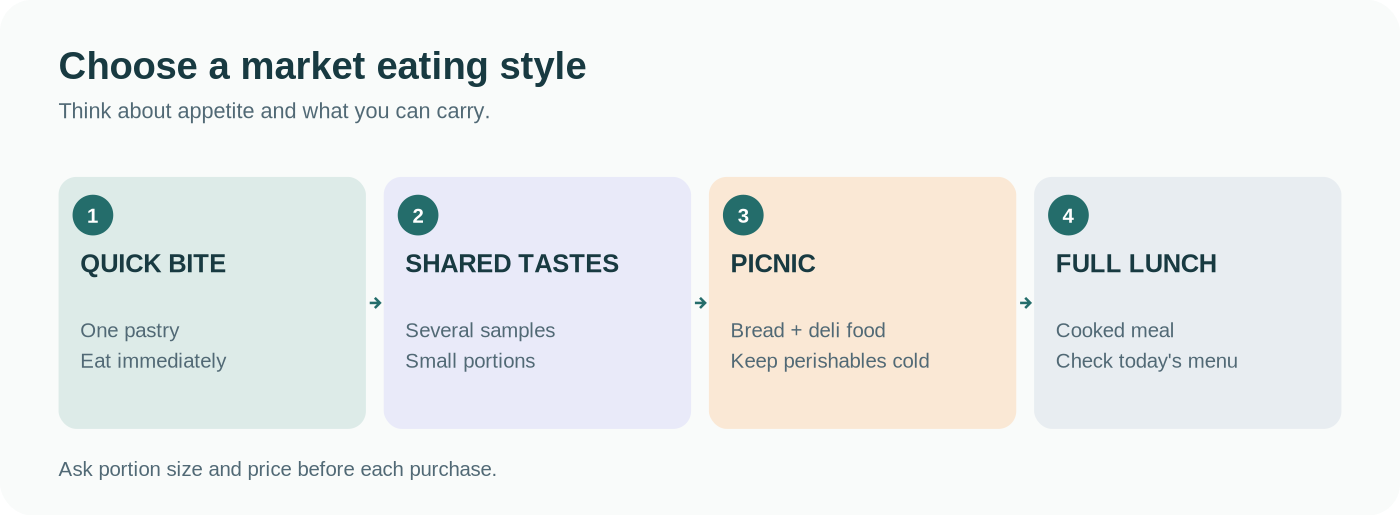
How to explore Mahane Yehuda Market in two hours
This is a food-first browsing plan, not a fixed route requiring specific shops to be open.
- First 15 minutes — get oriented. Walk the main passages, note where the bakeries and produce stalls are, and decide whether you want a full lunch or small tastes.
- Next 25 minutes — share something savory. Order a khachapuri, burekas or fresh bread. Do not make the first purchase the largest one.
- Next 20 minutes — compare ingredients. Explore olives, pickles, cheeses and spices; ask what you can carry and what needs refrigeration.
- Next 20 minutes — take a pause. Buy a juice or find a suitable seat. Markets are working shopping spaces, not permanent dining rooms.
- Last 40 minutes — choose one lunch or sweet stop. Sit down to eat, or take halva and a pastry for later. Check transport before leaving.
These are suggested time blocks, not timed tours. Fridays are usually more crowded as shoppers prepare for Shabbat, so a relaxed weekday morning is often simpler for a first-time visitor.
When is Mahane Yehuda Market open for food?
The market’s published FAQ states general hours of Sunday–Thursday 08:00–19:00 and Friday 08:00–approximately 15:00, with regular market trading closed during Shabbat and on holidays. It recommends 09:30–17:00 on weekdays for visitors. These are market-wide guidelines, not every vendor’s schedule. Individual counters can open later, close earlier or change hours for holidays and local circumstances.
| Day | General market expectation | Best planning approach |
|---|---|---|
| Sunday–Thursday | Normal daytime trading | Late morning to early afternoon for varied food choices |
| Friday | Shorter trading day before Shabbat | Arrive early, expect crowds and check closing times |
| Saturday / Shabbat | Regular daytime stalls generally closed | Do not plan a daytime market food tour without direct confirmation |
| Holiday or holiday eve | Hours may differ substantially | Verify the date and each priority vendor |
The market is near Jaffa Road, with access by light rail and other transport depending on the current service schedule. Use live transit information for the specific date; see Getting Around Israel Without a Car for the countrywide overview.
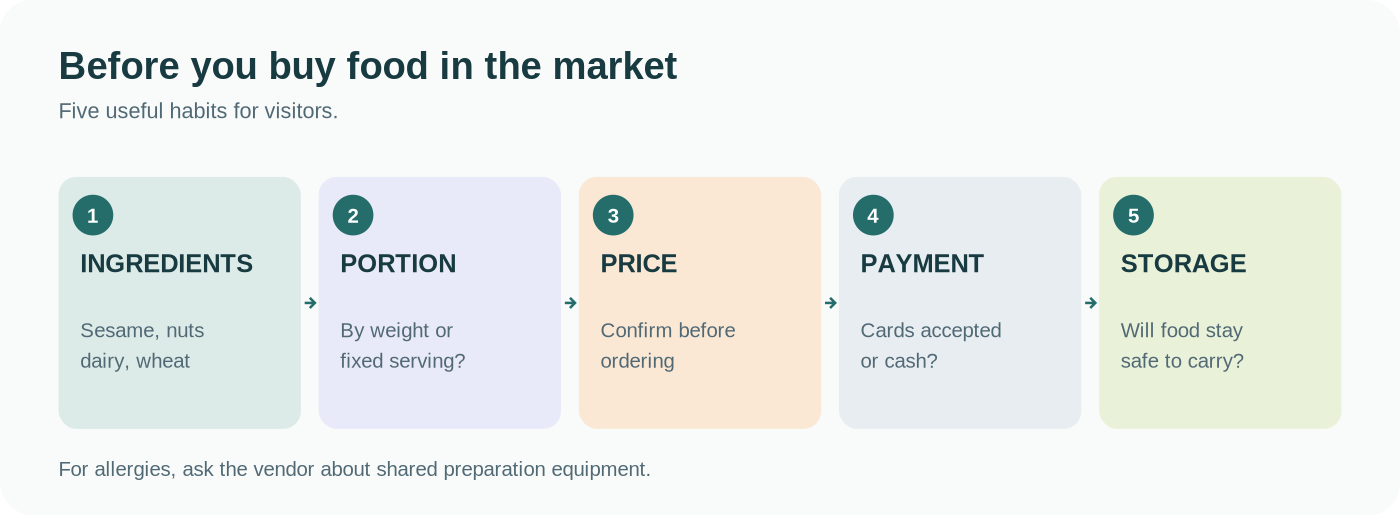
Food allergies, payment and shopping etiquette
- Ask before sampling. Some stall samples are complimentary; others are part of a paid tasting. Do not take food without an invitation.
- Check allergens each time. Sesame, wheat, dairy, eggs and nuts appear in many market foods; shared equipment can matter.
- Ask the price and portion first. Per-weight prices and prepared portions are different products. Do not assume a taste represents a fixed serving size.
- Bring a flexible payment option. Small stalls may have different card and cash practices; verify before ordering.
- Keep walkways clear. Residents come to shop; avoid blocking counters or photographing people at close range without permission.
- Keep cold foods cold. Buy cheeses and other perishables close to the time you can refrigerate them.
Frequently asked questions
What is Mahane Yehuda Market famous for eating?
Fresh breads, savory pastries, halva, spices, deli foods and juice are all strong starting points. What is available on a particular morning depends on each vendor and season.
Where can I try khachapuri at Mahane Yehuda?
The market directory lists Hachapuria near HaShikma and HaEshkol streets. Confirm its current opening status and menu before visiting; cheese-filled pastries can take time to prepare.
What time should I visit the market for food?
A weekday visit between 09:30 and early afternoon allows time to browse while more stalls are usually trading. Fridays can be crowded and finish earlier for Shabbat preparations.
Is Mahane Yehuda Market open on Saturday?
Regular daytime market stalls are generally closed during Shabbat. Some surrounding restaurants may keep separate hours, but that is not the same as an open daytime food market.
Can I eat vegetarian food at the market?
Yes, many breads, vegetables, salads and some prepared dishes can fit a vegetarian diet. Check ingredients, cheese, eggs, cooking methods and cross-contact at the individual counter.
How much should I budget for a food tasting visit?
Prices vary with date, portions and vendor. Choose a spending limit, ask the price before ordering, and decide whether you want several shared bites or a full seated lunch. This article deliberately avoids unverified fixed prices; see Israel Travel Budget for general trip-cost planning.
Sources and editorial notes
Checked 3 November 2026: Mahane Yehuda market FAQ, the market directory’s restaurant listings, Hachapuria, Hava Brothers Bakery, Halva Kingdom, Basher Fromagerie, Uzi Eli and the market street directories. These sources describe vendors and broad trading patterns; they are not a real-time guarantee of a business’s status, hours, prices or menu. The guide covers daytime food only.